Salespeople get contract answers in a minute, and new questions reach a lawyer
An assistant in Slack answers contract questions from the legal playbook and past signed contracts, names who must approve, and passes new questions to legal.
- Used day to day by
- Salespeople
- Sales head
- Legal team
What the assistant uses here
Answers from your systems, within each person's access.
- Channels Reaches people where they already talk
- Your approval Acts in your systems only after a person approves
How it runs with AI
Salespeople ask the automated assistant in Slack. It looks up the deal in HubSpot, finds the position in the legal playbook on Confluence and the contracts signed in DocuSign with the same term. It replies in about a minute with the answer, the clause and who must approve. Questions the playbook leaves open go to a lawyer with the deal and the nearest clause attached.
How the assistant works here
Where people ask, what it draws on, and what comes back.
Where people ask
-
 Slack, steps 1, 3 and 5
Who asks
- Salespeople
- Sales head
- Legal team
What it draws on
Apps
-
 HubSpot, steps 2 and 6
 -
 Confluence, step 3
 -
 DocuSign, step 4
Context
- Common contract terms, step 1
- Sales team members, step 1
- Deal details that matter, step 2
- Legal playbook, step 3
- Fallback positions, step 3
- Who approves each fallback, step 3
- Terms signed before, step 4
- Who may see each contract, step 4
- Playbook version in force, step 5
What comes back, and who decides
- An answer with its sources, step 5
Who decides
- The sales head approves the fallback before the contract goes out, step 6
How a request runs
-
Step 1, the assistant: Reads the question a salesperson asks in Slack
-
Step 2, the assistant: Looks up the deal in HubSpot
-
Step 3, the assistant: Checks the ask against the liability clause in the legal playbook
Exception Passes the question to a lawyer in Slack, with the deal and the nearest clause, when the playbook holds no position on it
-
Step 4, the assistant: Finds contracts signed in DocuSign with the same cap
-
Step 5, the assistant: Replies in Slack with the answer, the clause, the past contracts and who must approve
- Person
Step 6, a person: The sales head approves the fallback before the contract goes out
The same flow works with the apps you use.
Who controls it
-
Access
It runs with each person's own access, so it shows only what they could open themselves
-
Approvals
New legal positions stay with legal. The assistant answers from positions the playbook already holds and passes the rest to a lawyer
-
Record
Every question, source, action and approval is recorded
This fits you if
- Salespeople ask legal about the same contract terms every week
- Your standard positions and fallbacks are written in a playbook, for example in Confluence
- Signed contracts sit in DocuSign and deals are tracked in HubSpot
- Deals wait a day or more for a legal answer
What to watch for
- Legal keeps the playbook current and dates each change. The assistant quotes the version in force
- Fallback terms still need the approver the playbook names, such as the sales head
- Salespeople see which customers signed a term. The full contract opens only for people with access to it in DocuSign
- When a lawyer answers a new question, legal decides whether it becomes a playbook position for next time
Often done together
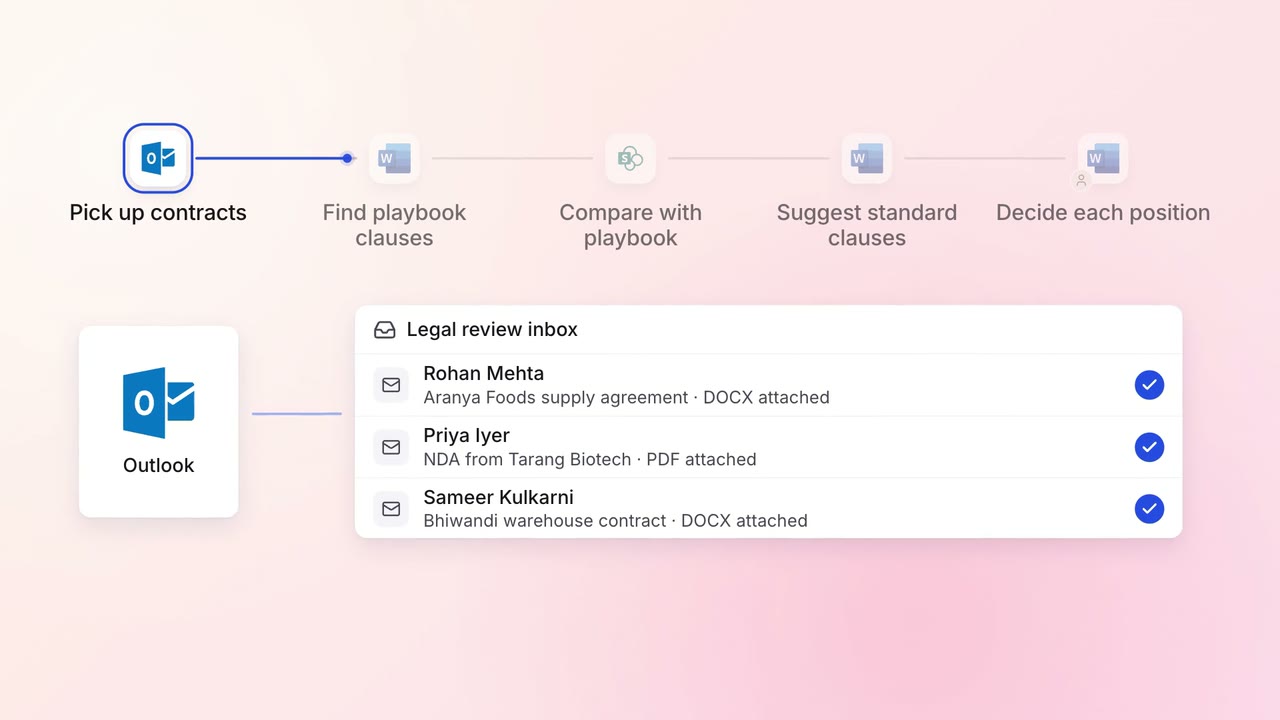
Legal and compliance Contract review
Incoming contracts are checked against your standard positions, with each difference marked
 Outlook
 Microsoft Word
 SharePoint
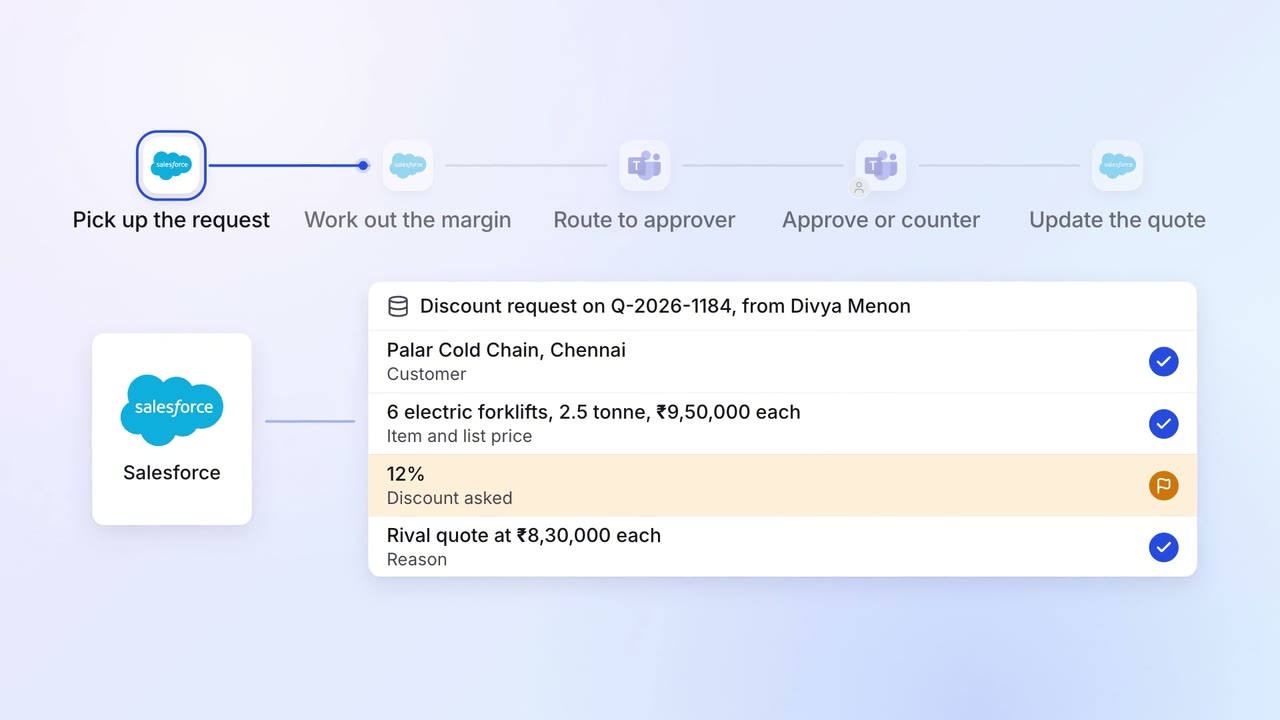
Sales Proposals and quotes
Discount requests reach the right approver, with the margin impact shown
 Salesforce
 Microsoft Teams
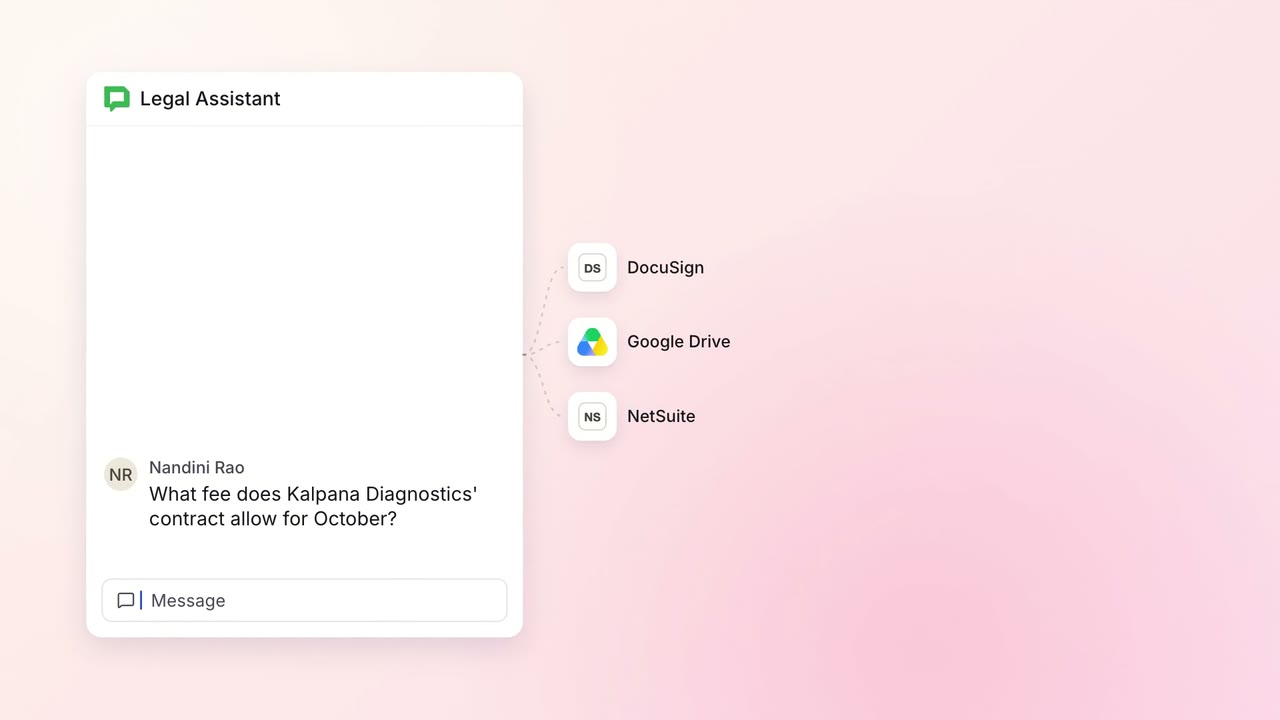 Company assistant
Legal and compliance Contract review
Lawyers ask in plain words and get a contract's current terms, checked against its invoices
 Google Chat
 Google Drive
- DocuSign
 NetSuite